Featured Post

Book Blogger - Submit a book for review!

  Are you an author? Would you like your book promoted on my blog? and website? Would you like to have your book reviewed? If so, please con...

Wednesday, December 22, 2021

WHY WE WRITE: Your First Novel


Okay, so to begin with, I am no expert. I do not have a book published with a major publishing company, I do not have a movie deal, and last month my three books on the market brought me a total of $43 of revenue. However, that brings us to our first point. There are a lot of reasons writers write. I would hold "to get rich" may be on many lists but is likely never the number one reason. We write as therapy. We write to engage the world around us. We write to remember, memorialize, educate, warn, encourage, or just to entertain. We write because we have stories to tell.

Obviously, to write you need a story. Most people who have ever considered writing a book have a story rolling around in their heads. I am in a writer's group and hear these often: Super heroes with unique inventions, journal entries that could be stories, military puzzlers, "what-ifs," smash ups of genres members like, mysteries, romances, and encounters of the paranormal. I love sitting around discussing the ideas. 

For some, the idea is enough inspiration. For others it is not and the book remains in their head. That is why I think one of the first things you must do as a writer is decide WHY YOU WRITE.

“All writers are vain, selfish, and lazy, and at the very bottom of their motives there lies a mystery. Writing a book is a horrible, exhausting struggle, like a long bout of some painful illness. One would never undertake such a thing if one were not driven on by some demon whom one can neither resist nor understand. For all one knows that demon is simply the same instinct that makes a baby squall for attention. And yet it is also true that one can write nothing readable unless one constantly struggles to efface one's own personality. Good prose is like a windowpane.”

- George Orwell, Why I Write 

What is the catalyst that took you from "I might write a book someday..." to "My book will be about...." or "My book will show people..."

I have a dear student who I taught in her undergraduate courses. She lived a difficult life where she was abused throughout her childhood. In adulthood she found similar relationship patterns with similar results. She studied psychology and found a career path helping others. She also wrote a book. Her book seeks to offer hope to others in similar situations. It is her "Why."

I have a young man that worked for me during his college days. He studied journalism and went on to a successful career at several major magazines. In writing a particular article he came across a story from his home state of Tennessee regarding mines, miner conditions, and the impact to the earth. It caught his attention and he decided to not only write a brief article but to make it a book. His "blurb" or elevator pitch work was done in the article. His book will develop those findings. He already has an audience to network and access through his career since the community that reads the magazine are also interested in this topic. His writing must be heavily researched and accurate. His goal is not to become the next famous author, but to impact the world for the better through his work.

A woman I deeply respect writes mystery novels based in STEM / science. She hopes someday to use the income from writing as a primary income source. I think she will. But she also writes about science. She has a PhD and a career in the field her fictional characters play in. The science is her lifelong love and passion. For her, money is part of the equation but not the only part. That said, her world of marketing, cover design, editing, and promotion costs are radically different than my dear student mentioned above. The lady telling her own story takes her books to the audiences she already interacts with. My scientist friend seeks audiences who have never met her or know her at conventions or marketplaces.

“What I found was an ability to enjoy writing again, because I stopped making it about wanting to be the best, or wanting to be better than some past version of myself, or better than other people I admire a lot who write YA fiction.

Instead of seeing it as a pyramid, or something that you're trying to get to the top of; I started seeing it as a huge ball that I'm trying to, like, contribute one layer of paint to. Lots of other people are contributing layers of paint, and through that the ball gets more beautiful and more interesting, and also bigger.

And instead of me needing to be at the top of my game somehow, what I can really do I think in the end, is contribute in a small way to a very big conversation that's very old. And that's what art is for me.”

― John Green

Here are a few questions that might help you discover your "WHY"

- Who do I want to read my book? How important is each circle to me?


- In one sentence, how do I want a reader who closes my book on the last page to feel or think?


- Why do I read books? Is my goal in writing the same? (If not, align your reading habits. Go find authors writing to your same projected audience)


MY WHY:

    For years I thought about writing "when I had time." I was in a field where there were opportunities. I saw gaps in the professional literature that I could speak into from my own experience. I had won writing awards in High School and even had a few things published in my college literary magazine. I had friends who wrote books. None of this was enough.

After a divorce I found myself in a new career path with a new living situation and new friends. Through the divorce I realized many I thought were my deep, personal friendships were not. So, as a middle aged man I set out to make new friends. I was at a con (ConNooga) with my son looking at cosplay Star Wars blaster rifles when a booth next door caught my eye. I am an avid reader and there was a cheap collection of stories offered by local authors. The book was titled Crazy Buffet. I handed the man my $5 and picked up the book. Then one of the great moments of my life happened.

"Hey, you know, we all meet twice a month. You are welcome to join."

I went. I was welcomed. I learned (I'm a total nerd and love learning new things) and built friendships as I ate BBQ and apple pie. And there you had it. I started writing because writing for me was what my friend group did.

So then, what would I write? For the next Crazy Buffet collection I wrote a story I had carried with me for years. In my twenties I spent time in Rwanda. It was immediately after the genocide and the stories were still fresh, often with bodies still unburied to see. One such story was a very brief interaction with a bi-racial couple. The man had rescued the woman and her child from a mass grave. He helped her across the border at loss of his own job and security. They eventually married and made a life together in exile. That is all I knew of their story. The rest I developed from my imagination and what I knew from my travels. It was my first published piece. Christmas presents to all my friends!

In my writing group there was always talk about writing a book. I thought I would take the challenge. On their advice to "write what you know" I started looking around my life. At the time one of my kids was having a difficult time with school bullies. I was working in a middle school as a teacher and saw the impact of bullying. The counselor training in me clicked with the school teacher in me. Then came the spark - "What if a new kid on the first day was walked to class by the school bully?" 

I wrote. I was encouraged by my clan. I wrote not to be a bestselling author but to tell a story I believed in and to learn the craft so my second story could be even better. Jam Sessions was born. New kid has anxiety attacks and is bullied. He finds a new group of friends and learns the value of writing (journaling). Wow... sound familiar?

My love of myth led to my next book: twelve Hours on the Block. It came about as I joined another writing group" the Corner Scribblers. They wrote sci-fi, horror, military scifi, steampunk, and as the leader puts it... "great pulp fiction." I had been working on a few characters with no story to put them in as I was reading a book on character development. I had the idea to put them in prison with the Aztec gods of creation (I was teaching the Aztec gods' story at the time in my Middle School classes.). The group have a small indie press: Three Ravens Publishing. They produce flash fiction collections I participated in and during a meeting I told them about my prison story. Three Ravens picked it up. Twelve Hours on the Block came to life. Again, the link for me was my involvement in a friend circle.

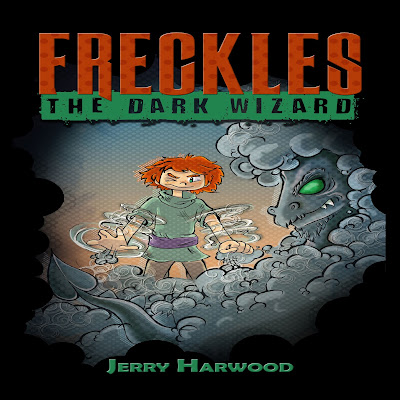
My third, Freckles: The Dark Wizard is at heart another anti-bullying book. This one is in the fantasy world, where I do most of my own casual reading. It shows growth in my writing skills and also growth in knowing what I need to contract out. (Thanks Meredith for the great cover art!!!)

Why I write has changed. I still write because it is what my friends do. I also write because I think people respond better to story than textbooks. It is why we love preachers who tell us about Daniel in the Lion den or Noah in the ark rather than the one discussing the list of spiritual gifts or the five greek words used in the text. We love story. We find in them the courage to be better people. As the John Green quote above states, I hope my blotch of paint makes the picture just a bit prettier.

So, why is this so important?

It is important because if you know WHY you are writing you can form a better game plan to SUCEED in writing. 

Remember my student I mentioned earlier? She was not looking for a traditional publishing house. Don't get me wrong, she wouldn't turn down a lucrative contract. However, her "WHY" is to put her story in the hands of those who need it. Self publishing is a great course for her because she will always control her book. She can order inexpensive author copies to give away, she can offer the digital version free of charge, she can post access to it wherever she goes. It is another tool in her tool box for a career in helping.

My science friend, on the other hand, invests a lot in branding and marketing. She seeks representation by agents and teaches writing to promote her label.

Me? I am for the first time this year leading panels at ConNooga. That's right... where I started my writing career. It is a huge moment for me. I have joined my local writer's guild and become part of the board. My area of interest is the membership section. I hope to connect other writers to groups and encourage them to write. I've placed my anti-bullying books on Teachers-Pay-Teachers so entire classrooms can access them for minimal cost ($2 for a class set). I keep writing things that interest me. I write more than I market. When I do market my books I do it in my friend zones or in areas where I think my content is needed (next year I will have a booth at the Tennessee Middle school Librarian Association meeting).


Still reading? Or at least skimmed to the bottom?

Good for you. In this series I hope to talk through some of the basics on writing as I have discovered through my journey. This is not "30 days to 30,000 book sales." This is not "How to be famous," or "How to Write the Next Harry Potter." Those courses are out there and some probably work (SAVE THE CAT!)

This is how to get YOUR story into the hands of others based on your WHY.

Sunday, December 19, 2021

Support an Indie Author for Christmas!!


ON AUDIBLE!!


Freckles: The Dark Wizard is now available on Audible!  Voiced by the talented Byron Hagan, it is a great production. Best of all - First five people to message me can have a copy for free in exchange for an unbias, honest review. Send requests to jerryharwoodbooks at the google mail. Put "Freckles Audiobook" in the subject line!


HERE IS WHAT BOOKLIFE 

(A Subsuduary of Publisher's Weekly)

HAD TO SAY:

10 out of 10
"Jerry Harwood's third YA novel is a tour de force of magic, mayhem and self-discovery for protagonist Simon, who turns out to have a lot more going for him than anyone thought." 


Freckles: The Dark Wizard has been reviewed by The Book Life:

Review

Plot: Simon attends Flame Rock Middle School where absolutely everyone is going to grow up to be a wizard. The question is, what kind of wizard? Simon has freckles, a feature that bodes ill for his power as a wizard and puts him at the bottom of the social ladder in middle school. But as he comes into his full wizarding powers, Simon discovers that he can conjure a dragon - powerful dark magic indeed - and that his perception of himself trumps what anyone else thinks of him. Freckles: The Dark Wizard is a well-crafted allegory about growing up during what is perhaps one of the most difficult periods of many a kid's life.


Prose/Style: 
The prose is completely appropriate for a middle school reader, with just enough challenging vocabulary to make it interesting without slowing down the action.

"This fantasy has all the right elements for this age group—wizards, magic, pre-teen social challenges, and adventure."

Originality: 
Harwood is a middle school teacher and the father of six; his understanding of upper elementary school age kids, what will engage their attention, and their sense of humor is spot-on. This fantasy has all the right elements for this age group—wizards, magic, pre-teen social challenges, and adventure. A particularly refreshing element of this story is that it starts in a fantasy world, rather than taking the reader through a litany of events to get there.


Character Development/Execution: 
Simon is a completely believable middle schooler (aside from his wizarding powers, of course), portrayed with sympathy but without sentimentality. Simon discovers the power that will make him master of his own life, but the challenge is to learn to control it. The sensitive descriptions of Simon's efforts to negotiate the complexities of middle school social life, find his strengths, and figure out girls show Harwood's deep familiarity with and commitment to this age group.

Jerry Harwood's third YA novel is a tour de force of magic, mayhem and self-discovery for protagonist Simon, who turns out to have a lot more going for him than anyone thought.

The sensitive descriptions of Simon's efforts to negotiate the complexities of middle school social life, find his strengths, and figure out girls show Harwood's deep familiarity with and commitment to this age group.


Score:
  • Plot/Idea: 10
  • Originality: 10
  • Prose: 10
  • Character/Execution: 10
  • Overall: 10.00
REVIEWED BY  The Booklife Prize (a subsidiary of Publisher's Weekly)

Sunday, December 12, 2021

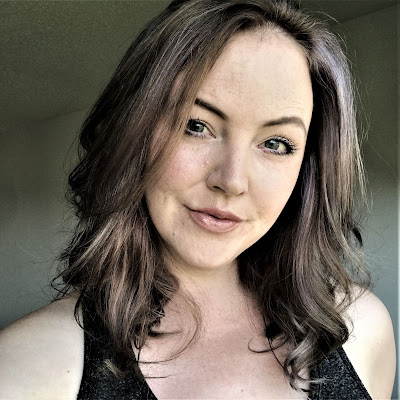
Interview and Review: S. C. Jensen


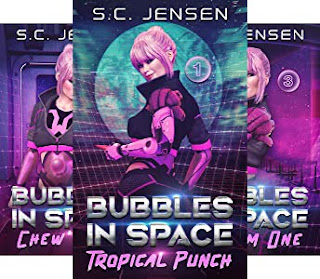
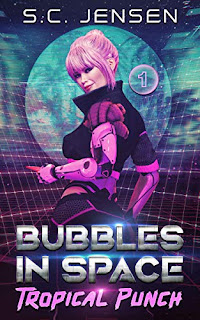
 Today, we have an opportunity to talk to S.C. Jensen.  Jensen has written the book, Tropical Punch (Bubbles in Space #1) First, let me thank you for joining me.  I appreciate you giving me your links and I want to share those with our readers.


A: Hi there, and thanks for having me! You can find me on my website/blog at www.scjensen.com. Facebook: www.facebook.com/scjensen.author Instagram: www.instagram.com/scjensen.author and Twitter: www.twitter.com/scjensem_author


Not sure how you keep up with so many social links! I do well just to do facebook, a blog, and a website. Can you tell us a little about yourself and what led you to start writing?


I’m a bit of a hunter-gatherer when it comes to writing ideas. I love to read and watch movies and visit art galleries. I’ve always got interesting bits and pieces floating around in my head. When they start connecting in interesting ways, and I see a pattern emerge, a little bell goes off in my head that says “This is a story!” and I write it down.


A: I’m a Canadian author and science fiction enthusiast. There’s nothing particularly remarkable about me, I don’t think. I’m just one of those kids whose nose was always in a book when they were growing up.


I'm always struck by Stephen King's advice in On Writing where he says if you aren't a reader you shouldn't write and the best writers are avid readers. So I'd say you are on track.


 I’ve always lived half-ways stuck inside my own head. The natural extension of that was to start writing my ideas down, so that I could tell people I was “a writer” not “a crazy person.” I’ve been a published author since 2014, and this is the first year I’ve delved into indie-publishing.


I saw a link to your 2014 book, The Timekeepers' War (SEE THE BOOK HERE) put out by Necromancer Press. It looks good as well. Where do you get your inspiration, information, and ideas for books?


A: I’m a bit of a hunter-gatherer when it comes to writing ideas. I love to read and watch movies and visit art galleries. I’ve always got interesting bits and pieces floating around in my head. When they start connecting in interesting ways, and I see a pattern emerge, a little bell goes off in my head that says “This is a story!” and I write it down.


How did your new series, Tropical Punch, emerge?


This particular series happened when I was reading a bunch of old noir detective novels by Raymond Chandler and Dashiell Hammett, and watching a lot of cyberpunk media like Blade Runner and the Matrix and Cowboy Bepop. And I thought, wouldn’t it be cool to have a hard-boiled detective novel set in a futuristic city? Except the detective is sober. And a woman. And a cyborg. And she really likes doughnuts…


That's brilliant.


That’s kind of how my brain works, haha.


Do you ever write characters who reflect your own life?


A: In one way or another most things I experience end up in my writing, even if it’s just a sensory detail or snippet of overheard conversation. One aspect of my life that I have intentionally included in this series is that the main character is an ex-drinker. I struggled with alcohol abuse for many years, so I guess that’s an ex-hobby? It’s a big part of who I am, and it was important to me to create a female character in recovery who deals with sobriety on top of all the challenges the plot throws at her.


I spent many years as a counselor working with people in recovery. I admire both your transparency to share and your daily victories. Someone who has overcome addiction has tremendous personal strength and often great insight to help others. What advice would you give someone who wants to be a writer?


A: Never stop writing! Try to write a little bit every day, study authors you love, don’t be afraid to make mistakes, and share your work! The worst thing creative people can do is try to hide their passion. Share it. Even the crappy stuff. It’s part of the process!


That helps me. As we do this interview, I am on the backside of trying my first NaNoWrMo (write an entire novel in one month). It has been a challenge. I've needed people speaking wisdom and encouragement into my life. What is the best advice you have ever been given as a writer?


A: Nobody is born a brilliant writer. All brilliant writers start as amateurs. The only way to get better is to try, fail, and try again, and fail better. You can’t be afraid to do the work.


Do you write full-time or around another job? How do you schedule your time to write?


A: I write full time. My “real job” is business writing for the mining and transportation company. 


Now, that in itself is super interesting.


A:But this is contract work, so I usually work on one project at a time. Occasionally my fiction projects overlap with my business projects, and then I prioritize whichever has the closest deadline. 


Hiring a professional development editor was a life-changing experience for me. It taught me to look at my writing in a completely different way.


How many hours a day do you write?


A: When I am drafting, my minimum word count goal is 3000 words a day. Usually I can do this in 5 hours. I will write 5-8 hours a day depending on what else is going on with my family, and often have 5-8K word days. And some days go really well and I’m done my 3K in 3 hours and I call it quits.


That is pretty impressive. What is your favorite part about writing?


A: Writing, for me, is all about personal challenge. I treat writing the way some people treat training for a marathon, or playing guitar until their fingers bleed. The joy, for me, is in the achievement. Meeting challenges, reaching goals. I push myself very hard. I’ve written more than half a million words this year. Next year I’d like to double that. I keep pushing the number of words I can do per day and the quality of those words. It’s not fun, exactly. But it is very rewarding! (Don’t worry if this sounds awful to you, it would to most people, and you certainly don’t have to write like this to be a “real writer.”)


What does literary success look like to you?


A: In some ways I already feel successful. I’ve completed a major goal this year, finishing the entire Bubbles in Space series, a novella, and a couple of short stories for anthologies. I’ve learned a lot about indie-publishing, and about myself as a writer.


Financially, I will feel like I’m a success when my husband can retire and we can spend more time together! Maybe the kids, too.


Well, hopefully this interview will help market and make that dream possible. Please tell us about your current release.


A: Tropical Punch is the first book in the Bubbles in Space series. It’s a noir sci-fi thriller series about a cyborg detective who gets in way over her head, pisses off a mega-corporation and the chief of police, and ends up hiding out on a luxury space cruise.


The first book is similar in style to the noir detective thrillers of the 1930s, and I even borrow and adapt some of the slang of the era, but as the series progresses and she gets more and more out of her depth it becomes more of a technothriller.


What exciting story are you working on next?


A: I just wrapped up Cherry Bomb (Bubbles in Space #5) for release December 13, 2021. I will be doing two more stand-alone novellas in the sister series HoloCity Case Files, which are traditional mysteries featuring Bubbles Marlowe’s early cases. Next year, I’m starting off with a new technothriller series, set in the same city but with an all new set of characters.


Who are your favorite authors?


A: I read very widely, and this is an impossible question to answer! In sci-fi, I love Margaret Atwood, N.K. Jemesin, and Octavia E. Butler, Larry Niven, Christopher Moore, William Gibson… the list goes on.


Several of my favorites as well. What’s your favorite under-appreciated novel?


A: Octavia E. Butler’s Lilith’s Brood trilogy!


Not sure I've read that. I'll have to check it out. What was the best money you ever spent as a writer?

Goodreads


A: In the early stages, the first couple of books I wrote, hiring a professional development editor was a life-changing experience for me. It taught me to look at my writing in a completely different way.


What is your writer’s kryptonite? 


A: As any parent will probably say… children.


True that. What part of writing and publishing was most difficult for you?


A: Advertising and marketing is by far the biggest challenge! I’m still learning, and will probably always be learning as the landscape is always changing!


If you figure it out, please let me know! Are you involved in any writer groups?


A: I no longer participate in any writing craft groups. My work goes straight to my trusted editor and beta readers. But I do belong to a number of professional author groups, and I highly recommend all writers considering indie-publishing check them out: 20BooksTo50K and Self Publishing Formula.


Anything additional you want to share with the readers? 


Thank you for taking the time to learn a little bit about me. If you have any questions or would just like to geek out about books, please send me an email at contact@scjensen.com! I love email. I hope you delve into Bubbles in Space and have a fantastic adventure!


One more time, where can someone go to purchase your book?


Amazon US: https://www.amazon.com/dp/B08WRW13L5

Amazon UK: https://www.amazon.co.uk/dp/B08WRW13L5


MY REVIEW:


A cop down on her luck. Disability. Loss of an arm on the job. A small PI start-up with a little shot of income from a lucky break that came with a  free admin. A crime. A case. All the stuff that makes a great crime novel. Add in a cyborg arm, body scanners, a futuristic world where water and vegetables cost a week salary, a demi-god wannabe, and an emotional support pig. What you have here is a great story in the spirit of Blade Runner, Ghost in the Shell (the book, not the Scarlet Johansson movie), or Neuromancer but with the one liners of a Dirty Harry film. Edgy with lines like “They’ll find your pink nippled corpse in the harbor” or “we can debrief anytime you need,” but never drifts into gore or erotica with no plot motivation.  Be sure to upgrade your accessories to pink and jump on this series. The story ends well resolving all the open questions (I hate crime novels that leave major questions unanswered). Jensen also does a great job allowing the world she created (skin tech and evolving machines) to open the story for the next book. 


Review: Twelve Weeks to Midnight Blue

KidVenture: Twelve Weeks To Midnight Blue tour banner

This is my post during the blog tour for KidVenture: Twelve Weeks To Midnight Blue by Steve Searfoss. KidVenture: Twelve Weeks to Midnight Blue is an interactive business adventure story for kids to learn about being an entrepreneur.

This blog tour is organized by Lola's Blog Tours and the tour runs from 3 till 23 December. You can see the tour schedule here.

KidVenture: Twelve Weeks To Midnight Blue book cover
KidVenture: Twelve Weeks To Midnight Blue (KidVenture #1)
By Steve Searfoss
Genre: Middle Grade Fiction
Age category: Middle Grade
Release Date: 26 January, 2020

Blurb:
Teach your kids about business and economics in a fun, meaningful way and inspire them to be entrepreneurs. Millions of Americans are small business owners or work at companies, yet there are not many books that explain to kids what business is about, the way there are books for kids about being a firefighter, farmer or astronaut. Beyond basic business concepts, KidVenture shows that character matters in business and the ability to persevere when there are setbacks and being someone who is trustworthy are key ingredients of success.

In Twelve Weeks To Midnight Blue, Chance Sterling launches a pool cleaning business over the summer. Join Chance as he looks for new customers, discovers how much to charge them, takes on a business partner, recruits an employee, deals with difficult clients, and figures out how to make a profit. He has twelve weeks to reach his goal. Will he make it? Only if he takes some chances.

KidVenture stories are business adventures where kids figure out how to market their company, understand risk, and negotiate. Each chapter ends with a challenge, including business decisions, ethical dilemmas and interpersonal conflict for young readers to wrestle with. As the story progresses, the characters track revenue, costs, profit margin, and other key metrics which are explained in simple, fun ways that tie into the story.


Links:
- Goodreads
- Amazon
- Amazon paperback
- B&N

KidVenture: Twelve Weeks To Midnight Blue graphic


Steve Sreafoss author picture
About the Author:
I wrote my first KidVenture book after years of making up stories to teach my kids about business and economics. Whenever they'd ask how something works or why things were a certain way, I would say, "Let's pretend you have a business that sells..." and off we'd go. What would start as a simple hypothetical to explain a concept would become an adventure spanning several days as my kids would come back with new questions which would spawn more plot twists. Rather than give them quick answers, I tried to create cliffhangers to get them to really think through an idea and make the experience as interactive as possible.

I try to bring that same spirit of fun, curiosity and challenge to each KidVenture book. That’s why every chapter ends with a dilemma and a set of questions. KidVenture books are fun for kids to read alone, and even more fun to read together and discuss. There are plenty of books where kids learn about being doctors and astronauts and firefighters. There are hardly any where they learn what it’s like to run small business. KidVenture is different. The companies the kids start are modest and simple, but the themes are serious and important.

I’m an entrepreneur who has started a half dozen or so businesses and have had my share of failures. My dad was an entrepreneur and as a kid I used to love asking him about his business and learning the ins and outs of what to do and not do. Mistakes make the best stories — and the best lessons. I wanted to write a business book that was realistic, where you get to see the characters stumble and wander and reset, the way entrepreneurs do in real life. Unlike most books and movies where business is portrayed as easy, where all you need is one good idea and the desire to be successful, the characters in KidVenture find that every day brings new problems to solve.

Author links:
- Website
- Facebook
- Twitter
- Instagram
- Pinterest
- Amazon

Giveaway
There is a tour wide giveaway for the blog tour of KidVenture: Twelve Weeks to Midnight Blue. These are the prizes you can win:
- 10 winners will each win a paperback copy of KidVenture: Twelve Weeks To Midnight Blue (US, Canada and UK only)
- one winner wins a $25 Amazon gift card

For a chance to win, enter the rafflecopter below:
a Rafflecopter giveaway

KidVenture: Twelve Weeks To Midnight Blue square tour banner

INTERVIEW:

Today, we have an opportunity to talk to Steve Searfoss.  Steve Searfoss has written the book, KidVenture: Twelve Weeks To Midnight Blue.  


First, let me thank you for joining me.  I appreciate you giving me your links and I want to share those with our readers.


https://kidventurebook.com/

https://www.goodreads.com/book/show/56090574-kidventure

https://www.amazon.com/KidVenture-Twelve-Weeks-Midnight-Blue/dp/1672411416/

https://www.barnesandnoble.com/w/kidventure-steve-searfoss/1136292505

https://twitter.com/KidVentureBook

https://www.instagram.com/kidventurebook/

https://www.facebook.com/kidventurebook

https://www.pinterest.com/kidventurebook/kidventure-twelve-weeks-to-midnight-blue/


That is great.  Can you tell us a little about yourself and what led you to start writing?

I’m a dad and an entrepreneur. I have four very curious kids that are always asking a lot of questions. Sometimes they’d see something, like two tickets to an event being offered at different prices, or a store offering a special promotion, and they would ask me why the price wasn’t the same. Often my explanation would start with, “well, imagine you’re the owner and you’re noticing your sales have been declining and you need to do something…” We pretended they owned a pizzeria, a bus company, a bank, a sporting goods store, and so on. I found they really liked these imaginary scenarios, they would keep asking more questions, until one day it clicked — hey, maybe other kids would like hearing these kinds of stories too. And that’s where I got the idea for KidVenture: a series of books where kids become entrepreneurs and learn how to start and manage a business.


Where do you get your inspiration, information, and ideas for books?


Twelve Weeks To Midnight Blue is the first book in the KidVenture series and it’s about a couple kids, Chance and Addie, who start a pool cleaning service in their neighborhood. We were on vacation staying at a hotel with my sister and her family and after a while my kids noticed one of those nets you use to scoop up leaves and they started cleaning the pool. I guess they got sort of bored of just swimming. After they ran out of leaves to scoop, they threw a few in, just so they could keep working. That lead to conversations about productivity and the rate at which you can scoop leaves and would you pay someone who scooped more leaves faster the same as someone who didn’t? And over the next couple days, as we were in the pool, they story of this pool cleaning company run by kids just took off. Ironically, the question I started with — would you pay the fast kid the same as the slow kid — didn’t actually make it into the book. Once I started writing there were too many other interesting things to talk about. I still want to come back to that question one day, maybe in a future book.


Do you write full-time or around another job? If you have a full-time job, does it ever play into your writing?


Writing is something I do on the side. My full time job is running my business. Now that I’m writing KidVenture stories, I find I’m always on the lookout for a good plot twist or interesting character. They come naturally in business. In Twelve Weeks To Midnight Blue, one of the big setbacks Chance faces is when he tries selling the pool cleaning service at a higher price and promptly loses a customer. That plot point came straight out of real life. I’d been negotiating for a client for a couple weeks on a possible project and when I submitted the final proposal, I decided to come in a little high on the price…and promptly lost the client. I felt terrible…and then felt giddy when I realized it would be fun to make my characters go through the same thing.


Can you provide us with a small excerpt?


How much do you charge?
I took a deep breath. I suddenly had an idea. This was our chance to make more money. This was our chance to make up for the fact that only one person had responded so far. It was a brilliant idea. 
Thirty dollars. We charge $30.
There was nothing but silence.
The silence grew uncomfortable.
Very uncomfortable.
Well make sure your pool is very clean,” I said, to say something. 
I dont know, thats too much,” she finally answered.
But—”
I think Ill have to pass.
Wait! Twenty-five. We can do it for $25.
No, thank you. Ill have to think about this.
Ok, twenty. We can definitely do it for $20.
But a minute ago you said $30.
I know. Well...” I stammered. Its usually $20, but we have a special service … and I just thought...” 
I tried to think what I could say to recover, but I was drawing a blank. Its ok, well do it for $20. No problem.
I dont think so.
I can be there in half an hour, I just need to get my net and bucket.” 
Not today,” she said flatly.
Ill do a good job.
Ive got to go. Thank you for your time. “ And then the line went dead. 


What exciting story are you working on next?


There’s No Plan Like No Plan, book two in the KidVenture series is ready to go and should be published in January or February of 2022. Chance and Addie return, this time they have a snow shoveling business in the winter. I had so many leftover ideas from the first book, rather than cram them into a super long book, I decided to write a second book with a similar setting (kids offering a service in their neighborhood) but with very different challenges. In fact, one of the fun things about the second book is that the characters think they know it all, after running a pool cleaning business, and quickly discover that shoveling driveways is very different than cleaning pools. For one thing, you can’t always predict when it will snow and how much snow there will be. So scheduling a work crew, for example, is a lot harder.


One more time, where can someone go to purchase your book?

Add your links here again


https://kidventurebook.com/

https://www.amazon.com/KidVenture-Twelve-Weeks-Midnight-Blue/dp/1672411416/

https://www.barnesandnoble.com/w/kidventure-steve-searfoss/1136292505

Lola's Blog Tours graphic


 One of the fun parts of book blogging is the opportunity to encounter and read a series I would not normally enjoy. My kids are all grown and my grandkids are too young for Steve Searfoss's target tween and middle grade group. However, I found I enjoyed the story myself. Steve truly has developed a book that teaches while entertaining. The real joy for me is that he not only teaches math, finance, and basic business principles, but he also models a healthy parenting model. In a world where so many of my students (I teach Middle School) come in each day from disrupted homes, I realize the books they read also project such homes. That is good in the sense of identifiable characters, but it means they are not learning what the other options are. I love the interchange between Searfoss's young boy Chance and his dad. I love his mom chiming in with her own guidance. I love his chatter with his sister. Overall, it is a delightful series and I truly hope this and forthcoming volumes are successful.


HERE IS MY REVIEW I POSTED ON AMAZON AND GOODREADS:

See Original

What boy doesn't have that new item they really want? And how often do they reach the age where instead of hearing, "Maybe at Christmas," they hear "Save your money." Twelve Weeks to Midnight Blue is the adventure of Chance Sterling opening a business cleaning pools in order to raise enough money for a new bike.

The story itself is fun as he knocks on doors, makes flyers with his sisters, and hires a friend who may or may  not be a top notch employee. My favorite parts were certainly the times he speaks with his dad, who offers him "banana consulting (pro bono). The book also introduces great concepts to kids like "vendors" and "marketing."

There is a flood of books on the market today where the protagonist has to have a blended or broken home, there must be some sort of world-ending stakes, or there must be trauma in the background. This book presents parents actively involved with their kids, teachable moments, silliness, and a good story. I also love the questions at the end of each chapter. As a teacher, I could see using this in a classroom. Overall, one of my favorite reads for 2021.


AND HERE IS STEVE'S BIO: (taken from Amazon)


I wrote my first KidVenture book after years of making up stories to teach my kids about business and economics. Whenever they'd ask how something works or why things were a certain way, I would say, "Let's pretend you have a business that sells..." and off we'd go. What would start as a simple hypothetical to explain a concept would become an adventure spanning several days as my kids would come back with new questions which would spawn more plot twists. Rather than give them quick answers, I tried to create cliffhangers to get them to really think through an idea and make the experience as interactive as possible.

I try to bring that same spirit of fun, curiosity and challenge to each KidVenture book. That’s why every chapter ends with a dilemma and a set of questions. KidVenture books are fun for kids to read alone, and even more fun to read together and discuss. There are plenty of books where kids learn about being doctors and astronauts and firefighters. There are hardly any where they learn what it’s like to run small business. KidVenture is different. The companies the kids start are modest and simple, but the themes are serious and important.

I’m an entrepreneur who has started a half dozen or so businesses and have had my share of failures. My dad was an entrepreneur and as a kid I used to love asking him about his business and learning the ins and outs of what to do and not do. Mistakes make the best stories — and the best lessons. I wanted to write a business book that was realistic, where you get to see the characters stumble and wander and reset, the way entrepreneurs do in real life. Unlike most books and movies where business is portrayed as easy, where all you need is one good idea and the desire to be successful, the characters in KidVenture find that every day brings new problems to solve.

Sunday, December 5, 2021

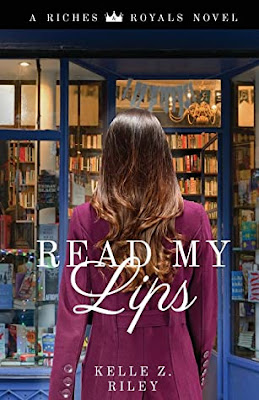
Review Kelle Riley's Read My Lips


5 stars!

 As someone who teaches and once had a career in the counseling world, I enjoyed the primary theme of trust in Kelle Riley’s Read My Lips. I can also connect well with how impactful other’s actions can be to our own lives. There is much to connect with as we are introduced to Claire, who directs the McClaire Literary Clinic. Clayton attends the clinic under a false name, Artie, seeking help with his dyslexia. Kelle then weaves a well paced story as “Artie” has several opportunities to reveal his hand and come clean with Claire. Kelle does a superb job portraying his fear: 

All of his noble urges to come clean with her had dissolved the minute he learned how deeply Peterman wounded her. No wonder she thought of men with power, money, and influence as the enemy.

- Riley, Kelle Z.. Read My Lips (pp. 90-91). Kelle Riley. Kindle Edition.

FOLLOW KELLE ON FACEBOOK

He is a man caught in a lie trying to live out the burning truth that he is in love. yet, what is he to do that Claire was so hurt by someone with wealth and power. If she discovers he isn't just a man overcoming dyslexia but an actual wealthy billionaire will she still love him? I enjoyed the fact that it is Clayton’s wealth and power as a billionaire chocolatier (and yes there are some steamy love scenes if that is what you read for) rather than his dyslexia that he fears will cause him to lose Claire. Of course, eventually Claire discovers who “Artie” really is. The end is well crafted and checks all the boxes of why we read such stories as Read My Lips. A wonderful first book in a series.

FOLLOW KELLE ON TWITTER

The second book promises the story of Jill, an enjoyable side character in Read My Lips. It looks to be fun based on Jill’s character in Read My Lips:

“Jill had shouldered the responsibilities of supporting her stepmother and her younger siblings from that moment on. Beneath Jill’s polished exterior was a woman determined to sacrifice herself to make amends for a twist of fate. A woman destined for heartache because she was prepared to forego love for money.”

Riley, Kelle Z.. Read My Lips (p. 128). Kelle Riley. Kindle Edition.


----

Taken from Author's Website
Kelle Z. Riley, writer, speaker, global traveler, Ph.D. chemist and martial artist weaves bits of her real life into the Undercover Cat Series books. The series features a scientist-turned-sleuth who juggles mystery, romance and the search for a perfect cupcake recipe.

By day Kelle is a full time chemist working in water treatment with multiple U.S. patents. At night she turns into an author whose accolades include finals in the RWA Golden Heart and numerous chapter contests. More information on her workshops can be found on her website.

Sunday, November 28, 2021

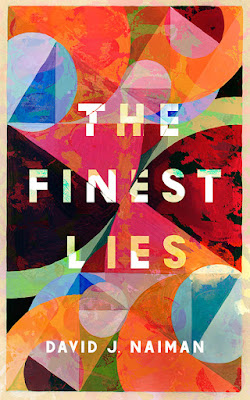
Review of The Finest Lies

Ever wanted to replace a sibling 
with a better, more polite robot version?

Ever wanted to replace a sibling with a better, more polite robot version? That is exactly the hook fro David J. Nalman's The Finest Lies. I found both the idea and the execution enjoyable. It is clear that David had fun developing the story, which arose from a creative writing prompt his own children did. 

BUY IT HERE

At the time of this posting, it is actually free with Kindle's program.

Here is the "blurb:"

High schooler Nicole Hallett has just about had it with her brother Jay, so when a mysterious man appears with an offer to replace him with a better one, she doesn’t hesitate. Nicole has always been impulsive, but this time, she finds herself in predicament far worse than anything she’s experienced. Just like that, an average snow day—usually filled with hot cocoa and snowball fights—is commandeered by the stranger, who forces the siblings into a dangerous game.

Confronted by past reflections, tested by present complications, and threatened by future possibilities, Nicole has until the end of the day to disentangle the riddle of her life.

This suspenseful, yet winsome novel by award-winning author David J. Naiman explores the power of family and forgiveness. But take heed. The truth can cut like shards of glass, especially for those who’d rather avoid it. Sometimes, only the finest lies will do.


David's Website HERE


And here is my review (also posted on the Zon and goodreads). It is a fun, easy read that reminded me a bit of Freaky Friday with the deadline to fix everything ( Goodreads )


----

The story opens with the great line (for any of us with kids at least) “If her mom hadn’t already left for work, she would have called Nicole dramatic—and said it dramatically, bathing in that classic parental brew of irony and hypocrisy.” With such a personality, it is only natural Nicole would call the number on her TV promising a brand new brother, an upgrade from the one she was so annoyed with. From there we encounter various swaps, though the desire for a ham sandwich to be thrown into the bargaining falls flat. Turns out, whoever is producing robot versions of kids doesn’t have many ham sandwiches. The story reads at a fast pace with enough similarity and differences between the characters and their robot selves to keep you engaged. That said, my favorite character is probably the dad who may not always know what is going on but is willing to make snowballs at any time. 

            The story came to the author out of his own kid’s creative writing. The afterward was a nice personal touch to the overall story which is a fun read.